Think about how much time you spend behind the wheel once winter hits Saskatoon.
Whether you’re inching through snowy morning rush hour on Circle Drive, idling while your windshield defrosts, or making a weekend highway trip across the province, winter driving asks a lot more of your body than summer cruising ever does.
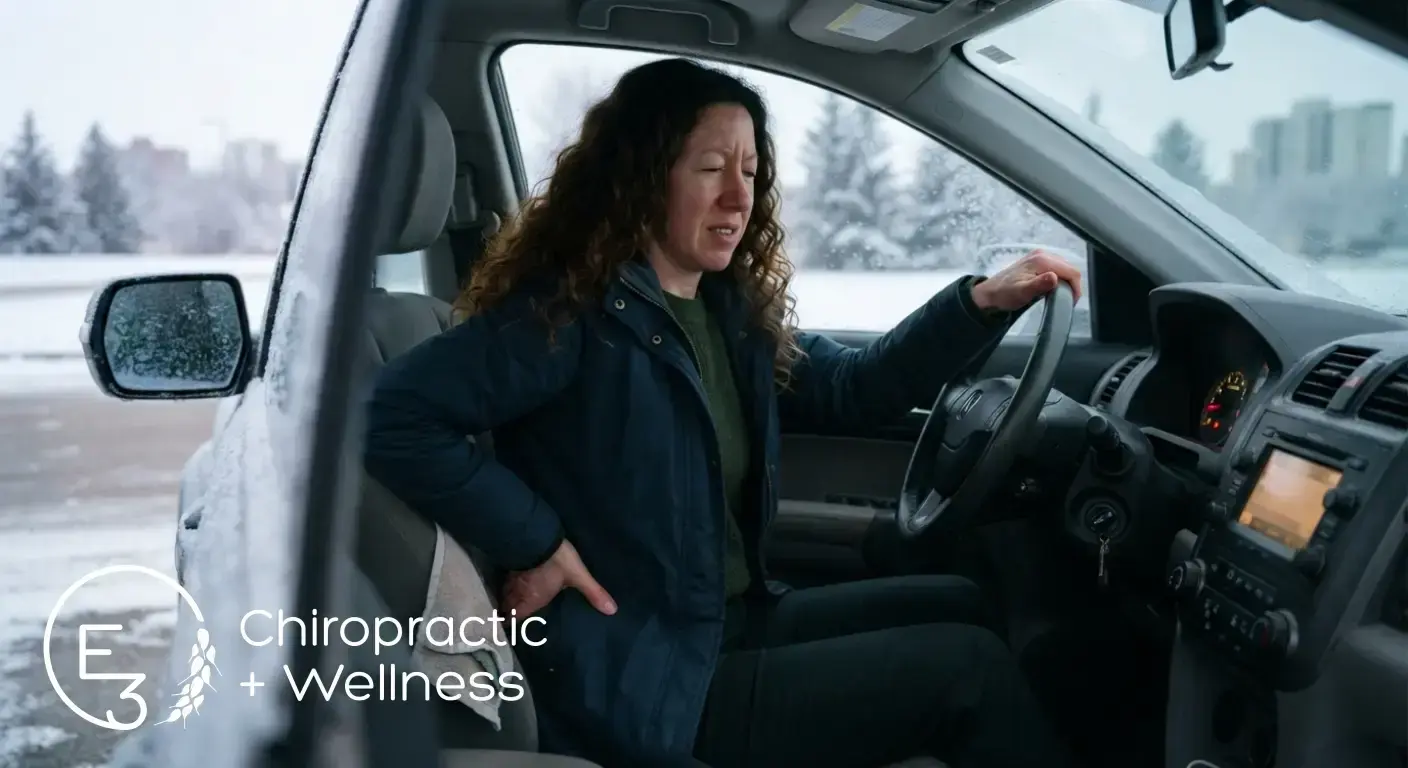
You bundle up in a heavy parka, slide into a cold car seat, grip the steering wheel tightly as you watch for black ice, and sit still for 30, 45, or 90 minutes at a time. Then, when you finally park, open the door, and swing your legs out onto the pavement, a sharp, stubborn stiffness grabs your lower back—or a dull ache settles right between your shoulder blades.
If getting out of your vehicle makes you feel twenty years older than when you got in, don't panic.
At E3 Chiropractic + Wellness, winter driving flare-ups are one of the most frequent reasons patients seek out a chiropractor in Saskatoon during late November and December. Your back isn't broken—it’s just reacting to a very specific combination of cold muscles, awkward seat angles, and road vibrations.
Let’s look at why winter driving takes such a toll on your spine, what’s actually happening behind the scenes, and how a few quick tweaks to your driver's seat can transform your daily drive.
The "Hammock" Analogy in Your Driver's Seat
To understand why sitting in a vehicle causes lower back pain so quickly, picture a worn-out hammock strung between two trees.
When you lie in a saggy hammock, your middle sinks downward into a C-shape, pulling your shoulders forward and rounding out your lower spine.
Most modern bucket car seats act just like that hammock. The seat bottom tilts slightly backward, your hips sink lower than your knees, and the backrest curves forward at the top. Now, add a bulky winter parka into the mix. A thick coat pushes your torso away from the backrest, leaving an empty gap right behind the natural curve of your lower back.
Without firm support behind your lumbar spine, your pelvis tucks under, your lower back flattens into a C-shape, and all your upper body weight rests directly on your spinal discs and ligaments. Add subtle, continuous road vibrations from frozen, rutted winter streets, and your back muscles have to work overtime just to keep you upright. By the time you park, those muscles are exhausted and locked into a protective spasm.
The 3 Hidden Winter Driving Triggers
Aside from seat geometry, winter weather adds three sneaky stressors to your commute:
-
The "White-Knuckle" Grip: Driving on slick roads or through blowing snow triggers a subconscious stress response. You lean forward toward the windshield, hike your shoulders up toward your ears, and tense your neck and upper back the entire trip.
-
Cold Seat Start-Ups: Sitting down on a freezing seat causes the muscles in your glutes, hamstrings, and lower back to reflexively contract to conserve body heat, immediately restricting healthy blood flow.
-
The One-Leg Twist Exit: When you finally reach your destination, swinging one leg out of the car and twisting your torso while your lower back is stiff from sitting places maximum shear force on your sacroiliac (SI) joints.
How We Help Saskatoon Drivers Stay Loose at E3 Chiropractic + Wellness
If your daily commute or holiday road trips are leaving you stiff, sore, or dealing with lower back pain in Saskatoon, stretching once you get inside only goes so far if your spinal joints are already restricted.
Here is how Dr. Layne and I help you get back behind the wheel comfortably:
1. Restoring Joint Motion
Hours of rounded sitting and road vibration often lock up tiny joints in your lower back, pelvis, and neck. Precise chiropractic adjustments restore normal movement to restricted joints, taking mechanical pressure off spinal discs and nearby nerves.
2. Releasing Deep Hip & Back Tension
We help calm down tight hip flexors, glutes, and upper shoulder knots that clamp down during tense winter drives, restoring healthy circulation so your muscles relax naturally.
3. Real-World Driver's Seat Setup Coaching
We walk you through simple, practical adjustments to your seat height, steering wheel distance, and lumbar support so your car works with your spine instead of against it.
3 Quick Tweaks to Pain-Proof Your Driver's Seat Today
Before your next drive across town, take two minutes to dial in your seat with these three easy adjustments:
-
Fill the Lumbar Gap: Roll up a small bath towel or grab a small cushion and tuck it right into the small of your lower back. If you're wearing a bulky winter jacket, unzip it once you sit down so your back can rest evenly against the seat.
-
Check Your Knee-to-Hip Angle: Adjust your seat height and tilt so your hips are level with—or slightly higher than—your knees. Keeping your knees lower than your hips naturally tilts your pelvis into a strong, neutral position and takes pressure off your lower back discs.
-
Use Your Seat Heater & Exit Like a Pro: If your vehicle has heated seats, turn them on right away to keep your lower back muscles warm and relaxed. When it’s time to get out, turn your whole body toward the door first, plant both feet firmly on the ground, and stand up using your legs instead of twisting your spine.
Enjoy the Drive Without the Backache
Winter driving in Saskatchewan requires enough focus without having to fight through a stiff neck, burning shoulders, or nagging lower back pain every time you step out of your vehicle. With proper spinal alignment and a few smart seat tweaks, your daily commute can feel comfortable all season long.
If driving or prolonged sitting has left your lower back feeling stiff, pinched, or exhausted, our team at E3 Chiropractic + Wellness is here to help you get clear, lasting answers.
When you’re ready, click HERE to book a discovery call with us today, and start getting some real answers.