.jpg)
Why Am I Always in Pain?
You wake up and before you even get out of bed, you feel it.
That tight pull in your lower back.
That stiffness in your neck when you turn your head.
Maybe even a dull headache– already starting.
You pause for a second and think…
“Did I sleep wrong again?”
So you stretch. Move around a bit. It helps… a little.
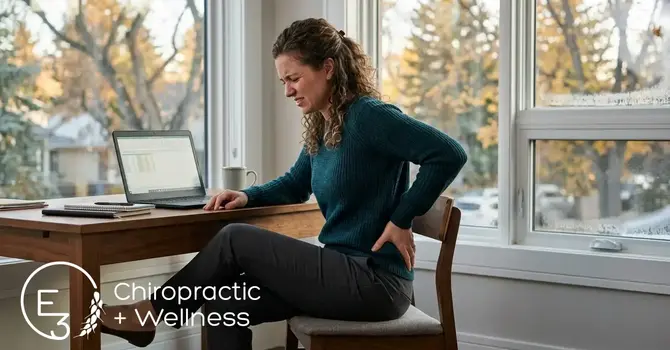
But later that day, it’s still there. Sitting feels off. Standing too long doesn’t feel great either. Now you’re shifting around, adjusting how you move without even thinking about it.
Sound familiar?
If you’ve been dealing with this for a while, it’s easy to feel stuck.
“What’s going on with my body?”
“Why does this keep coming back?”
Here’s the thing.
Your body isn’t random. And it’s not working against you.
It’s trying to get your attention.
What’s Actually Going On?
Most people think pain just shows up out of nowhere.
But it’s more like a warning light on your dashboard.
It doesn’t turn on the second something small goes wrong. It turns on after your body has been dealing with an issue for a while.
By the time you feel pain, something has usually been building in the background.
Your body’s been adapting, compensating, and doing its best to keep you going.
Until it can’t keep up anymore.
How This Shows Up Day to Day
This kind of buildup can show up in different ways.
For some people, it’s:
- Lower back pain after sitting or bending
- Neck stiffness that never really goes away
- Headaches that seem to come out of nowhere
- Tight hips that make movement feel restricted
- Sciatica that travels down the leg
At first, it’s easy to brush off.
You stretch a bit more. Maybe ignore it. Assume it’ll pass.
But then it keeps coming back.
And that’s usually when it starts to feel frustrating.
Why This Happens (A Simple Way to Think About It)
Think of your body like a system that’s meant to move smoothly.
Your joints handle movement.
Your muscles support that movement.
Your nervous system keeps everything coordinated.
When everything’s working together, movement feels easy.
But when one part isn’t moving well, the rest has to pick up the slack.
A simple way to picture it is a stiff door hinge.
If one hinge isn’t moving properly, the rest of the door has to work harder to open and close.
It still works… but not smoothly.
Over time, that extra strain adds up.
That’s when you start to feel tightness, stiffness, or pain.
What Leads to That “Stiff Hinge”
This doesn’t happen overnight.
It’s usually the result of small, repeated stresses like:
Sitting for long periods
Your body isn’t built to stay in one position for hours. Sitting puts steady pressure on your lower back and hips.
Posture habits you don’t notice
You don’t need “bad” posture. Even small, repeated positions over time can create strain.
Repetitive movements
Doing the same motions every day can overload certain areas.
Old injuries
Even if something feels healed, your body might still be compensating.
Stress and tension
When you’re stressed, your body tightens up, especially in your neck and shoulders. It’s like holding a low-level clench all day without realizing it.
None of these feel like a big deal at the moment.
But over time, they stack up.
Who This Affects
We see this every day at E3 Chiropractic + Wellness.
Most people dealing with ongoing pain aren’t coming in because of one big injury.
It’s usually:
- Sitting at a desk most of the day
- On their feet for long hours
- Lifting kids, groceries, or both
- Staying active but pushing through discomfort
- Managing a busy, often stressful schedule
In other words, normal life.
Common, but still worth paying attention to.
Where Chiropractic Care Fits In
At a certain point, stretching and hoping it goes away stops working.
That’s usually when people come in to see us.
Whether you’re working with me, Dr. Zach, or Dr. Layne, the first step is always the same.
We figure out what’s actually going on.
Because where you feel pain isn’t always where the problem starts.
We look at how your body is moving as a whole and where things aren’t working the way they should.
What an Adjustment Really Does
Let’s keep this simple.
An adjustment is a precise, controlled movement applied to a joint that isn’t moving well.
Going back to that hinge example, it’s like helping that stiff hinge move freely again so everything works better.
When a joint starts moving better:
- Other areas don’t have to compensate as much
- Muscles can relax
- Movement feels smoother
- Day-to-day activities feel easier
It’s not about forcing anything.
It’s about helping your body do what it’s already designed to do.
What People Often Notice
When things start improving, it’s usually not one big moment.
It’s small changes that add up.
People say things like:
- “I feel less tight”
- “It’s easier to get through the day”
- “I’m not constantly thinking about my pain”
- “I feel more like myself again”
And that shift matters.
Because when your body feels better, everything else feels easier too.
What You Can Start Doing Right Now
If you’re dealing with ongoing discomfort, here are a few simple starting points.
- Notice your patterns. When does it show up? That gives you clues.
- Keep moving. Even light movement helps. Your body responds better to motion than staying still.
- Don’t ignore it for too long. If something keeps coming back, it’s worth getting it checked.
The Part Most People Need to Hear
Don’t panic.
Your body isn’t falling apart.
It’s adapting.
And the fact that you’re noticing these signals now means you can do something about it.
What To Do Next
If you’ve been dealing with lower back pain, neck stiffness, headaches, or that constant feeling that something’s just off, you don’t have to keep guessing.
Sometimes the next step is simply getting clarity.
If you’re in Saskatoon and want to understand what your body actually needs, we’re here to help.
When you’re ready, you can take the next step below.
Click HERE to book a discovery call with us today. Let’s assess how your body is moving, identify what’s contributing to your pain, and create a clear plan to help you move and feel better.