Let's be honest.
Most of us are pretty good at ignoring pain.
A sore back after a long day?
"I'll be fine tomorrow."
A stiff neck that comes and goes?
"It's probably just how I slept."
A headache that keeps showing up every week?"
I've always had headaches.
"Sound familiar?
At first, it doesn't seem like a big deal.
The pain isn't unbearable.
You can still go to work.
You can still exercise.
You can still get through your day.
So you keep putting it off.
Weeks turn into months.
Months turn into years.
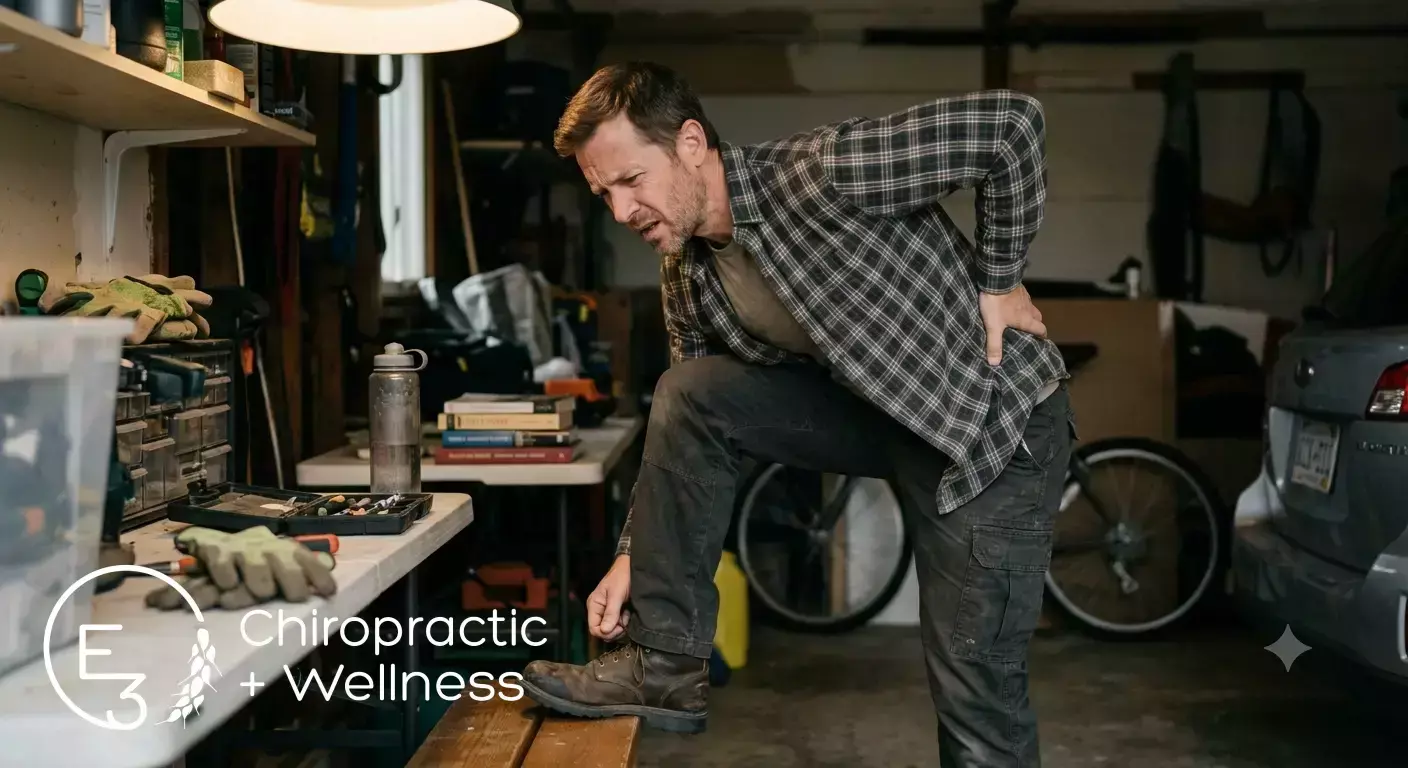
Then one morning, you bend down to tie your shoe, and your back "goes out."
Now you're wondering:"Why did this happen all of a sudden?"
At E3 Chiropractic + Wellness, we hear stories like this every week.
And here's the thing.
It usually didn't happen all of a sudden.
Pain rarely starts at its worst
Think back to when your pain first appeared. It probably wasn't intense. Maybe your lower back felt tight after sitting all day. Maybe your neck felt stiff after working at your computer. Maybe your hips felt sore after a long walk. Those little aches were your body's first way of getting your attention. The problem is that they're easy to ignore. Especially when life is busy.
Your body is incredibly good at adapting
One of the amazing things about the human body is how well it adapts. If one area isn't moving well, another area often steps in to help. You may not even notice it's happening.Everything still gets done. You still go to work. You still coach your kid's soccer team. You still hit the gym. But over time, those compensations start adding up. The body can only adapt for so long before it starts asking for help.
Why people wait
There are a lot of reasons people delay getting answers. Some think the pain will disappear on its own. Others don't have time. Some worry they'll be told they need surgery. Others assume it's just part of getting older. We understand all of those concerns. But here's what we often see. The longer a problem has been hanging around, the more it starts affecting other parts of life. You stop exercising. You avoid lifting things. You skip activities you enjoy. You become more cautious. Not because you want to.Because you're trying to avoid another painful flare-up.
Small problems are often easier to understand
Imagine you notice a tiny crack in your windshield. You could ignore it. And maybe nothing happens for a while. But eventually, that crack spreads. The same idea can apply to recurring aches and pains. When your body starts sending small signals, it's often easier to understand what's contributing to them before those patterns become more established. That doesn't mean every ache is serious. It simply means it's worth paying attention.
A story you might relate to
One patient came into the clinic because their neck had been stiff on and off for almost two years. It never stopped them from working. It just kept coming back. Eventually, the stiffness turned into frequent headaches, and they started avoiding long drives because their neck became so uncomfortable. When we talked about it, they laughed and said,"I probably should have looked into this a long time ago." After assessing how they moved, we found several areas that weren't working together well. Their neck had been doing extra work for a long time. Once we focused on improving movement and helping their body move more efficiently, they gradually became more comfortable and confident. More importantly, they stopped planning their life around their neck.
When should you pay attention?
You don't need to panic every time something feels sore.
But it is worth noticing if:
- The same pain keeps coming back.
- You're avoiding activities because of discomfort.
- You're relying on pain medication more often.
- You're waking up stiff every morning.
- Your pain is starting to affect work, hobbies, or family time.
Those are all signs that your body may benefit from a closer look.
What you can do right now
1. Listen to recurring symptoms
Pain that keeps returning is usually worth understanding.
Your body is trying to tell you something.
2. Stay active
Appropriate movement is one of the best things you can do for your body.
Avoiding all activity often makes things more frustrating over time.
3. Don't wait for a crisis
You don't have to be in unbearable pain before asking questions.
Sometimes the best time to understand what's going on is when the problem is still manageable.
4. Think long term
The goal isn't simply getting through today.
It's building a body that allows you to enjoy tomorrow, next month, and years down the road.
The bottom line
You don't have to wait until your pain becomes unbearable before taking it seriously. Your body is constantly giving you information. The sooner you understand those signals, the more options you often have for moving comfortably and confidently again. Pain doesn't have to control your schedule, your hobbies, or the way you live your life. Sometimes, all it takes is understanding what your body has been trying to tell you all along.
What to do next
If you've been waiting for your pain to either disappear or become "bad enough" before doing something about it, you don't have to keep guessing.
At E3 Chiropractic + Wellness, Dr. Kurtis, Dr. Zach, and Dr. Layne help people every day understand why recurring lower back pain, neck pain, headaches, hip pain, and stiffness keep coming back.
Together, we'll create a plan that's built around your goals, your lifestyle, and helping you move with confidence again. When you're ready, click HERE to book a discovery call with us today, and start getting some real answers.

.jpg)
.jpg)