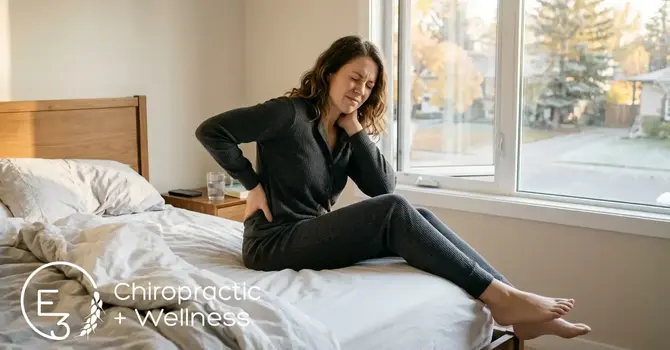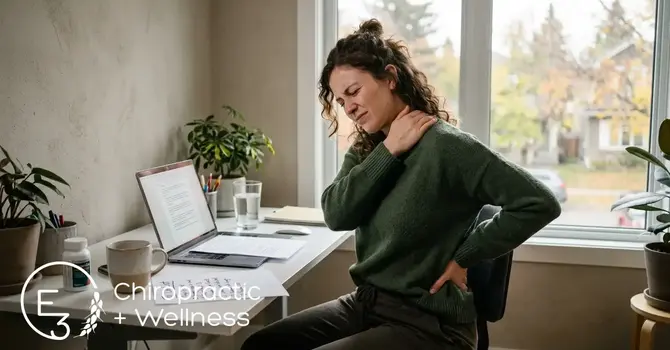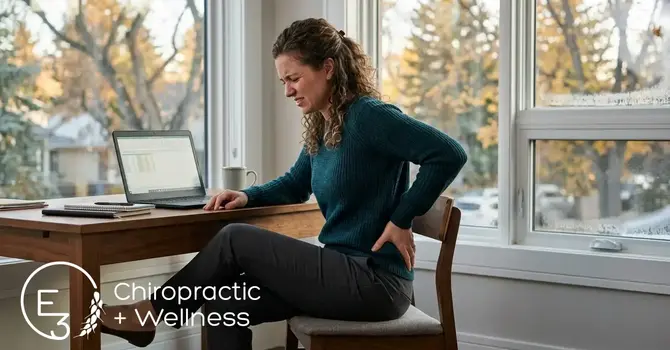
Have you ever noticed that one side of your body always seems tighter than the other?
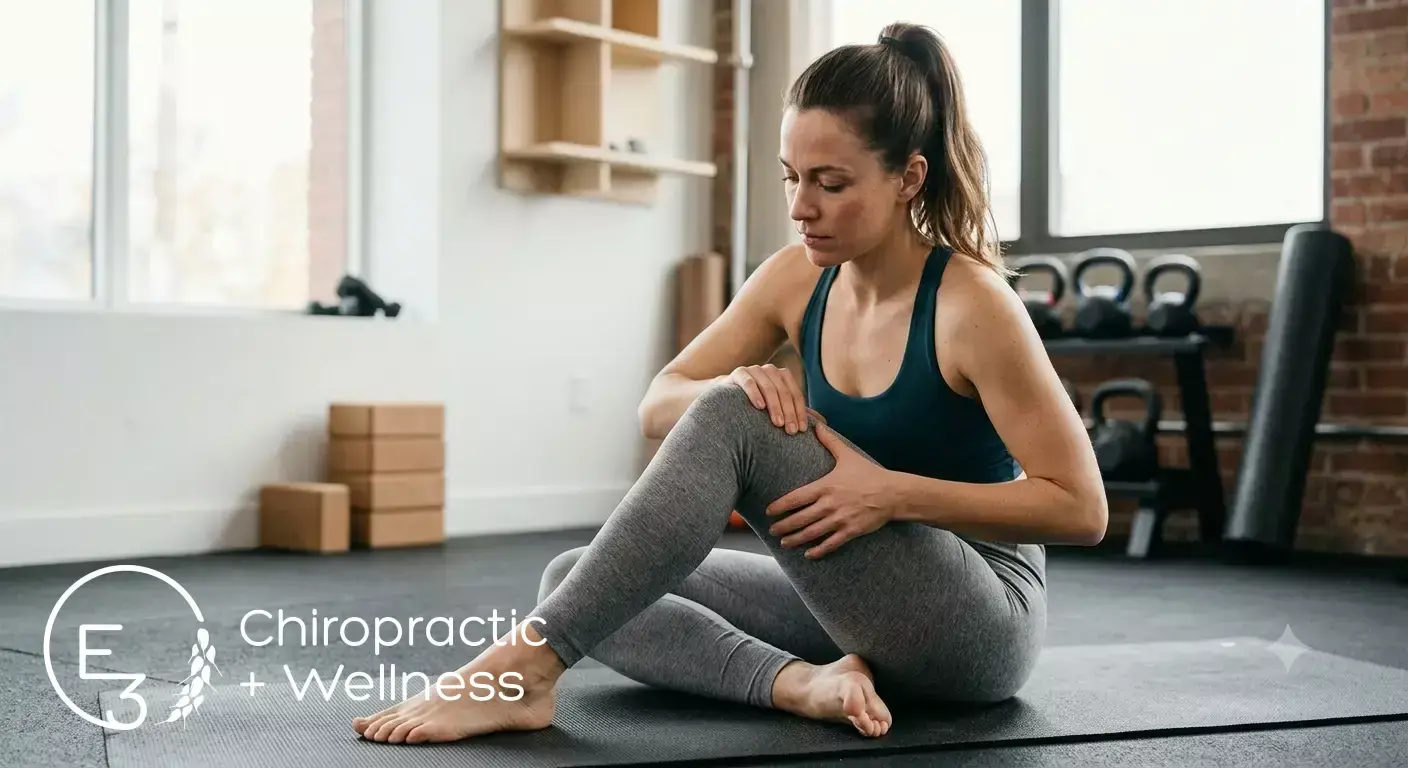
Maybe your right hip feels stiff every morning.
Your left shoulder is always tight.Or every time your lower back flares up, it's always on the same side.
You stretch it.
Massage it.
Foam roll it.
Maybe it feels better for a little while.
But before long...The tightness comes right back.
Now you're wondering:
"Why is it always the same side?"
At E3 Chiropractic + Wellness, this is something we hear almost every day.
And here's the thing.
Your body isn't perfectly symmetrical.
That's completely normal.
But when one side consistently feels tighter, stiffer, or more uncomfortable, it's often a sign that your body is compensating somewhere.
Your body is built to adapt
Think about your daily routine. You probably have a dominant hand. You may always carry your bag on the same shoulder. Cross the same leg when you sit. Reach for your coffee with the same arm. Stand with your weight shifted onto one leg while waiting in line. None of those things are bad. But over months and years, your body adapts to those repeated habits. Eventually, one side starts doing a little more work than the other. That's when tightness often shows up.
Tightness isn't always the problem
Here's something that surprises a lot of people. The area that feels tight isn't always the area causing the issue. Let's say your left hip isn't moving very well. Your right side may start working harder to make up for it. Over time, those muscles become overworked. They tighten up because they're doing extra work. It's a bit like having one coworker covering two jobs. Eventually, they're going to feel the strain. Your body works in much the same way.
Why stretching only helps for a little while
If you've been stretching the same side every day, you already know the feeling. It helps. Then the tightness comes back. That's because stretching treats the feeling of tightness. It doesn't always change the reason your body created that tension. If your movement patterns stay the same, your body often recreates the same tightness because it still thinks it needs it.
Everyday habits matter more than you think
You don't have to be an athlete to develop muscle imbalances.
They happen through everyday life.
Things like:
- Sitting with your wallet in one pocket
- Carrying a child on the same hip
- Always sleeping on one side
- Reaching across your desk the same way
- Standing on one leg while cooking
Individually, these habits aren't a big deal.
But repeated thousands of times, they can influence how your body moves.
A story you might relate to
One patient came into the clinic because their right hip was constantly tight. They stretched it every day. They even bought a massage gun hoping it would finally solve the problem. Nothing lasted. When we assessed how they moved, we noticed something interesting. Their left hip wasn't moving as well, so their right side had been picking up the extra work. The right hip wasn't the problem. It was the hard-working teammate trying to compensate. Once we improved how both sides of their body moved together, the constant tightness gradually became less frequent. They were relieved to finally understand why the same area always felt tight.
What can you do if one side always feels tighter?
1. Notice your daily habits
Ask yourself:
- Do I always carry things on one side?
- Do I cross the same leg?
- Do I stand the same way every time?
Small habits can add up.
2. Keep your body moving
Movement is one of the best ways to reduce unnecessary stiffness.
The more variety your body experiences, the better it adapts.
3. Don't chase the tightness
If the same muscle keeps tightening over and over again, ask yourself why.
The answer is often somewhere else.
4. Think about your whole body
Your body works as a team.
When one area isn't doing its job well, another area usually steps in to help.
Finding those movement patterns is often the key to lasting improvement.
The bottom line
If one side of your body always feels tighter than the other, don't panic. It doesn't automatically mean something is seriously wrong. More often, it's your body's way of adapting to how you move every day. The good news is that movement patterns can change. And when you understand why your body is compensating, you can stop chasing temporary relief and start making meaningful progress.
What to do next
If you're tired of stretching the same tight muscles, dealing with recurring lower back pain, neck pain, hip stiffness, or wondering why one side of your body always feels "off," you don't have to keep guessing.
At E3 Chiropractic + Wellness, Dr. Kurtis and Dr. Layne help people every day uncover the movement patterns behind their pain and build a plan that's designed for long-term pain relief, not just temporary fixes.
When you're ready, click HERE to book a discovery call with us today, and start getting some real answers.