
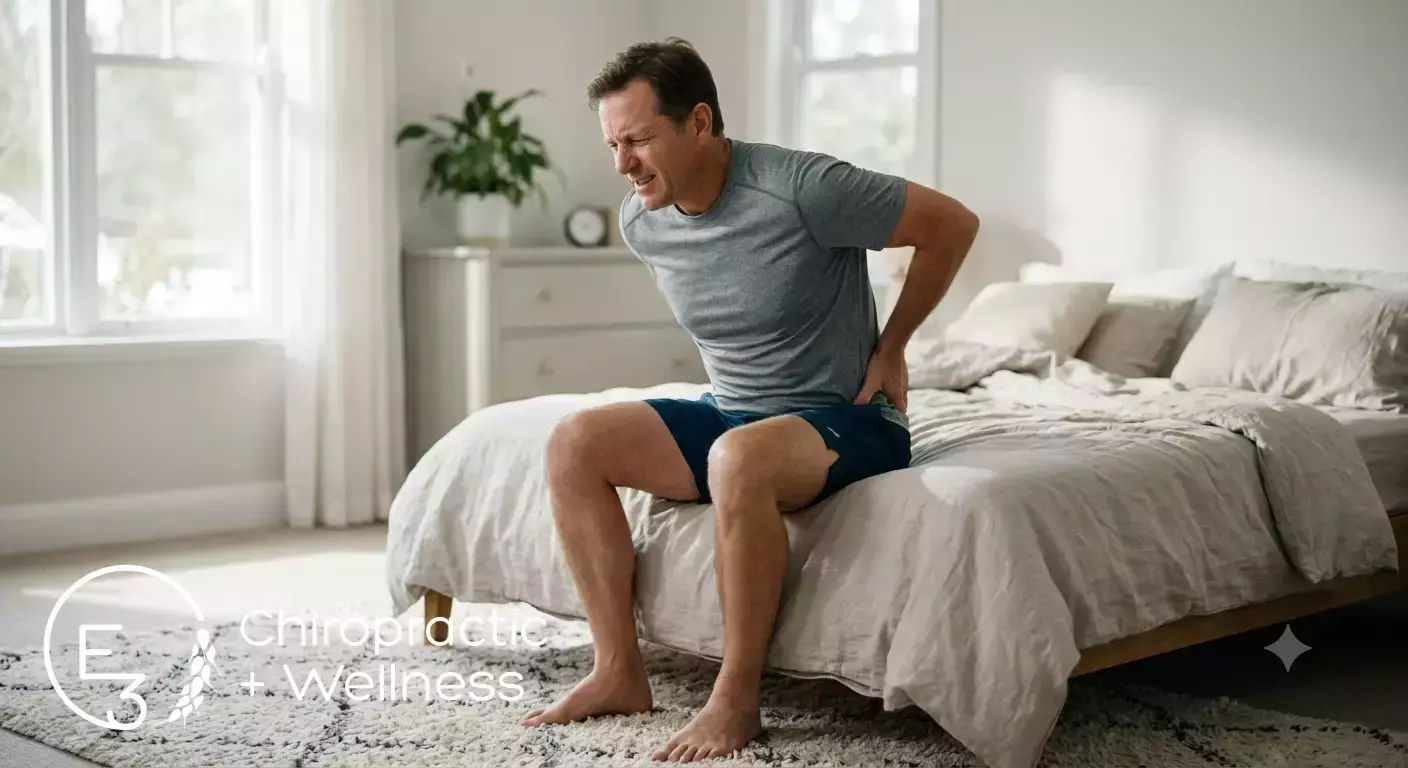
Have you noticed this lately?
You spend a Saturday working in the yard.
Go for a long bike ride.
Play a round of golf.
Or help a friend move.
Years ago, you might have been a little sore the next day.
Now? You're still feeling it three or four days later.
Your lower back is stiff.
Your neck is tight.
Your hips are aching.
And you're left thinking:"Why does it take me so long to recover now?"
If that sounds familiar, you're not alone.
It's a question we hear all the time at E3 Chiropractic + Wellness.
And here's the good news.
Recovering more slowly doesn't automatically mean your body is falling apart.More often than not, it means your body is asking for a little more support.
Recovery is just as important as activity
Most people focus on what they're doing. Very few people think about how well they're recovering from it. Think about your phone. You can use it all day long. But eventually, it needs to be recharged. Your body works the same way. Every workout. Every long day at work. Every weekend project. Every round of golf. They all use energy. Recovery is how your body prepares for the next challenge. When recovery isn't keeping up, your body starts letting you know.
Your body is keeping score
Recovery isn't just about sleep. It's influenced by everything you do. How much you're moving. How often you're sitting. How stressed you are. How consistently you're exercising. How well you're sleeping. How much time you give your body to adapt. None of these things usually cause pain on their own. But together, they can affect how well your body bounces back.
It's not always about getting older
This is one of the biggest myths we hear. People assume slower recovery is simply part of aging. Age can play a role. But it's far from the whole story. We've worked with people in their 60s who recover remarkably well. We've also met people in their 30s who feel stiff after every workout. The difference often comes down to how well their body is moving, adapting, and recovering. Your habits matter just as much as your birthday.
Small stresses add up
Imagine carrying a backpack. At first, it feels light. Then someone adds one more book. Then another. And another. Eventually, the weight becomes noticeable. Your body experiences stress in much the same way. Long workdays. Poor sleep. Busy schedules. Hours at a desk. Weekend projects. Even if each one seems manageable, they all add to the load. If your body never gets a chance to fully recover, it's no surprise that you start feeling sore for longer.
A story you might relate to
One patient came into the clinic because they couldn't understand why a round of golf left them sore for nearly a week. A few years earlier, they could play two rounds in a weekend without thinking twice. They assumed they were just getting older. But after talking through their routine, a different picture emerged. They had recently started working longer hours. They weren't walking as much. They had stopped doing the simple exercises that kept them moving well. And their sleep had become inconsistent. None of those changes seemed significant on their own. Together, though, they made recovery much harder. Once we helped them improve their movement, build more consistency into their routine, and address the areas that weren't moving well, they started recovering faster and enjoying golf again.
How can you support your recovery?
If you're feeling like your body takes longer to bounce back than it used to, here are a few things to focus on.
1. Keep moving between workouts
Recovery doesn't always mean sitting still. Gentle movement often helps your body feel and move better. A short walk or light mobility work can go a long way.
2. Prioritize quality sleep
Your body does a lot of its repair work while you sleep. If you're consistently running on empty, your recovery may struggle too.
3. Don't save all your activity for the weekend
If you spend five days sitting and then try to fit all your activity into Saturday and Sunday, your body has a lot to handle at once. Consistency usually beats intensity.
4. Listen to recurring soreness
Feeling sore after trying something new is normal. But if the same areas always stay stiff or painful long after the activity is over, it's worth asking why.
Your body may be compensating somewhere else.
The bottom line
Recovering more slowly doesn't automatically mean you're getting old or that your body is wearing out. More often, it's a sign that your body needs a better balance between movement, recovery, and the demands you're placing on it. The encouraging part?Those are things you can improve. When your body moves well, recovers well, and has the right support, it often becomes much more resilient than people expect.
What to do next
If you're frustrated because your lower back, neck, hips, or shoulders seem to take longer and longer to recover, you don't have to simply accept it.
At E3 Chiropractic + Wellness, Dr. Kurtis and Dr. Layne help people every day understand why recovery has slowed down and what they can do to build a body that's more resilient for work, sports, and everyday life.When you're ready, click HERE to book a discovery call with us today, and start getting some real answers.

.jpg)
