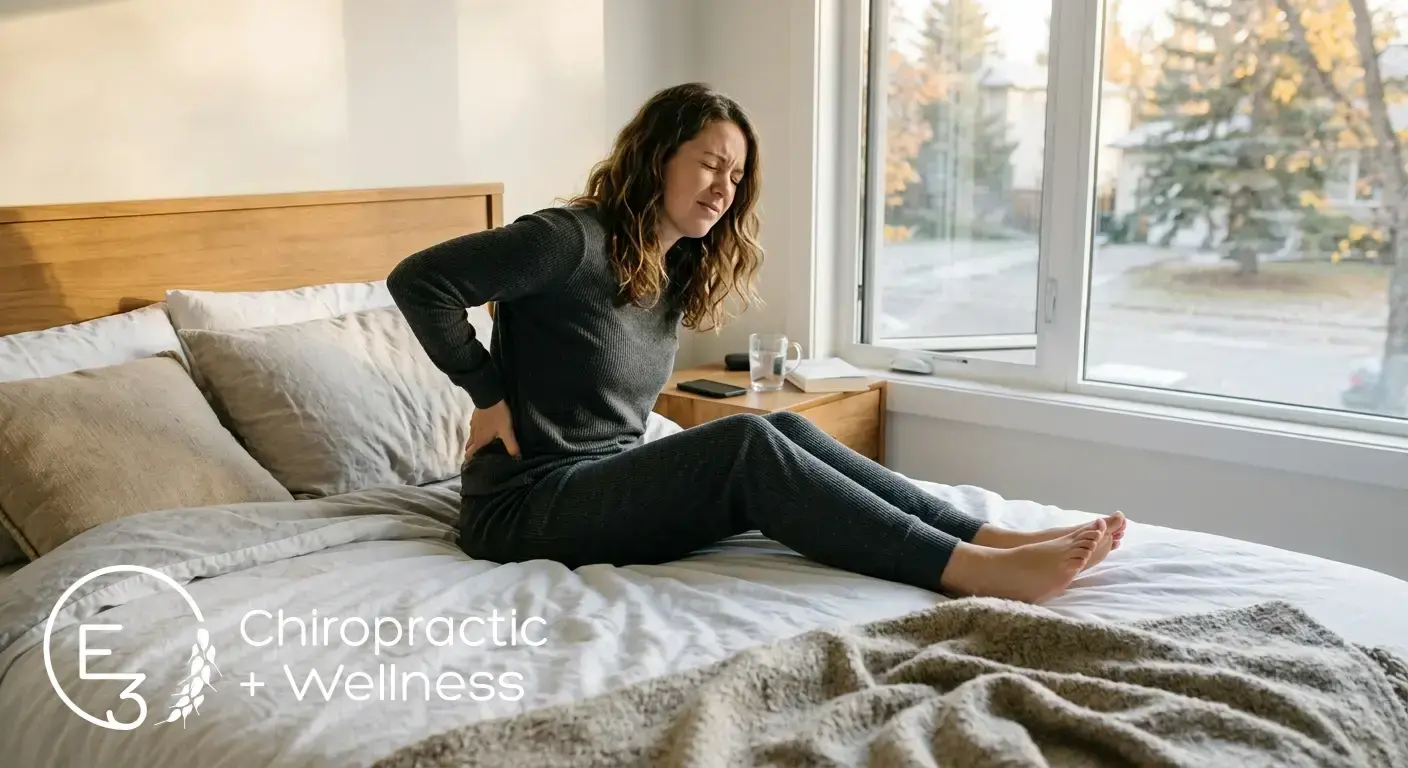
November in Saskatoon has officially arrived. The autumn leaves are gone, the mornings are noticeably frostier, and the cool Prairie wind has a bite to it that makes you bundle your jacket just a little bit tighter.
If you stepped out of bed this morning and felt like your lower back, knees, or neck were as cold and rigid as the frost on your windshield, you are definitely not alone.
Every year as November sets in, patients walk through our doors at E3 Chiropractic + Wellness with the exact same story:
"Dr. Kurtis, as soon as the weather turns cold, my body just feels locked up. My lower back aches when I stand up, my neck gets stiff while driving, and getting out of a chair takes twice as much effort."
If this sounds like your daily reality right now, don't panic.
Your body isn't falling apart, and you don't have to spend the next several months living in discomfort. Understanding how cold weather affects your joints and muscles is the secret to staying loose, mobile, and comfortable all winter long.
The "Rusty Door Hinge" Analogy
To understand why cold November weather causes your joints to feel so tight, it helps to look at how your joints stay lubricated.
Inside every joint in your body—from your spine and hips to your shoulders and knees—is a thick, nutrient-rich fluid called synovial fluid. Its primary job is to act like grease on a door hinge, reducing friction between your bones so you can bend, twist, and reach effortlessly.
Think of synovial fluid like a WD-40 or door hinge lubricant.
When it’s warm outside, that lubricant stays thin, smooth, and spreads easily across the joint surface. But when the temperature drops, joint fluid becomes slightly thicker and less viscous.
When you sit still in a cold car, work at a chilly desk, or wake up on a frosty morning, your joint fluid takes longer to warm up and circulate. That’s why your body feels like a "rusty door hinge" during those first few steps or movements—the fluid is simply cold and thick!
Combine that thick fluid with our natural tendency to hunch our shoulders and tense up against the Prairie wind, and you have a recipe for daily joint stiffness, muscle spasms, and nagging aches.
Why Barometric Pressure Shifts Add to the Ache
It’s not just the temperature that plays tricks on your body—it’s also the shifting atmospheric pressure.
When November storm fronts move through Saskatchewan, barometric pressure drops. Lower air pressure means less force pushing against your body from the outside, allowing soft tissues like muscles, tendons, and joint capsules to expand slightly.
If a joint in your lower back, hip, or neck is already slightly restricted or inflamed, that tiny expansion puts extra physical pressure on nearby nerve endings. That's why your joints seem to "know" when the weather is about to turn cold!
How We Keep You Moving Smoothly at E3 Chiropractic + Wellness
Taking pain relievers can numb the ache for a few hours, but if your joints remain locked and your joint fluid isn't circulating properly, the stiffness will keep coming back every cold morning.
When you come see Dr. Layne or myself at our Saskatoon clinic, our goal is to restore normal joint mechanics so your body can generate its own natural heat and movement:
1. Restoring Natural Joint Play
When spinal or pelvic joints are locked out of their normal motion, thick joint fluid gets trapped. Gentle chiropractic adjustments restore full movement to restricted joints, instantly encouraging healthy fluid flow and taking physical pressure off nearby nerves.
2. Relaxing Protective Muscle Guarding
Cold air causes muscles to reflexively contract to conserve body heat. We help calm down tight, overworked muscles around your lower back and neck so your body can relax out of "fight-or-flight" mode.
3. Practical Winter Movement Strategies
We coach you through simple indoor movement routines, posture resets, and warm-up habits so you can stay active, strong, and pain-free even as the snow begins to fall.
3 Simple Tools to Beat November Joint Stiffness Today
If today's cold air has your lower back, hips, or neck feeling cranky, try these three simple, practical steps to warm up your body from the inside out:
-
Start Your Day with a 2-Minute Motion Warm-Up: Before stepping outside into the cold, do 10 gentle arm circles, 10 easy bodyweight squats, or a few slow torso twists indoors. Moving your joints actively "stirs the motor oil" inside your joints before facing the chill.
-
Keep Your Core and Neck Warm: Drafts cause spinal muscles to lock up in self-defense. Wear a light scarf or layer up around your lower back so your core stays warm and relaxed.
-
Hydrate with Warm Liquids: Dehydration makes joint fluid even thicker and muscles more prone to cramping. Drink warm water, tea, or broth throughout the day to keep your soft tissues hydrated.
Stay Comfortable and Mobile All Season Long
You don't have to accept cold weather stiffness as an inevitable part of living in Saskatchewan. Your body is built to adapt and move, and with the right joint alignment, good circulation, and simple daily movement habits, you can feel great no matter what the thermometer says.
If the November chill has made your lower back, neck, or hips feel tight and sore, our team at E3 Chiropractic + Wellness is here to help you get unstuck and moving with confidence.
When you’re ready, click HERE to book a discovery call with us today, and start getting some real answers.