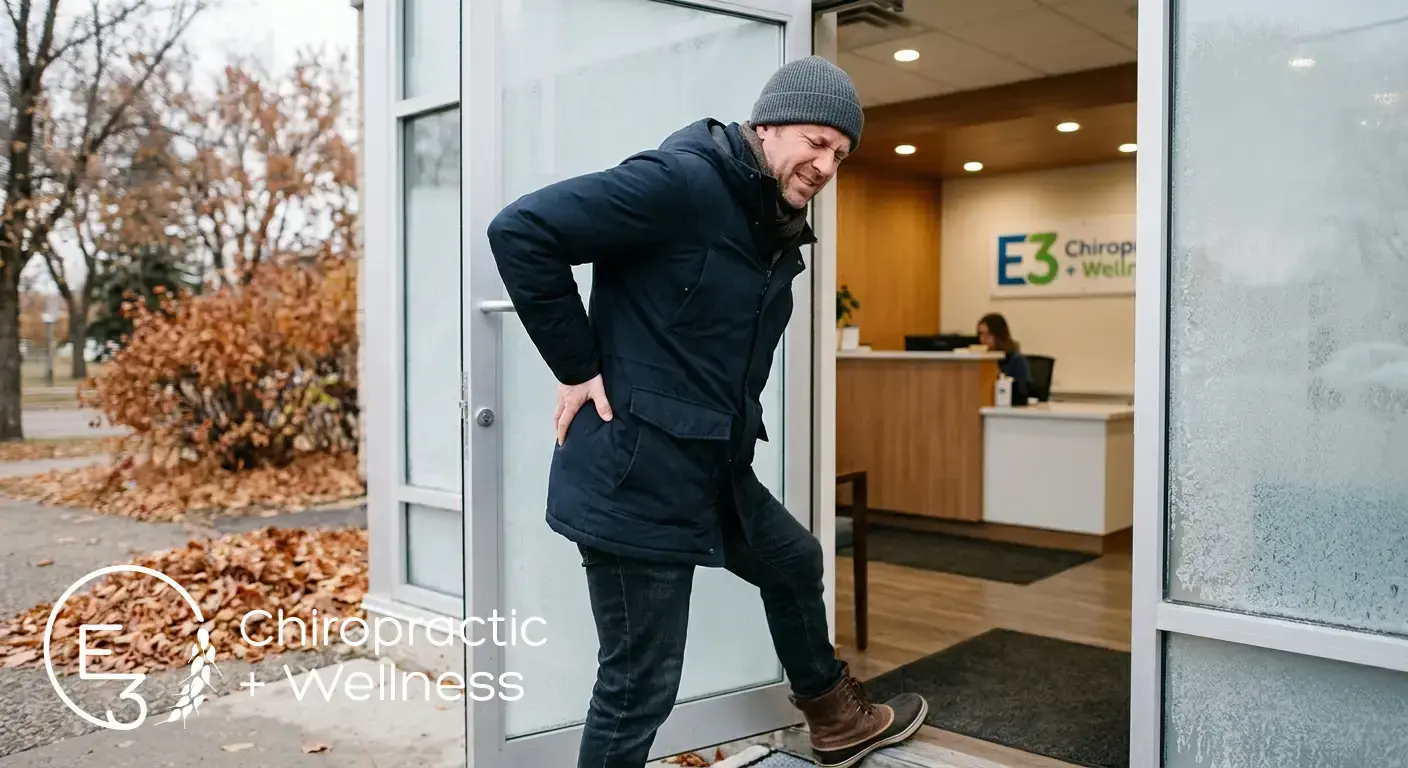
If you woke up this morning, stepped out into the crisp autumn air, and felt like your knees, lower back, or neck were suddenly ten years older than they were last month, you are definitely not imagining things.
Every year as October rolls on in Saskatoon, the temperature drops, the atmospheric pressure shifts, and our clinic phones start ringing with the exact same question:
"Why do my joints hurt so much more as soon as it gets cold outside?"
Maybe it’s an old knee injury acting up, a stubborn stiffness across your lower back when you get out of bed, or a nagging throb in your neck that gets worse whenever you step out into the wind.
First, don't panic. Your joints aren't deteriorating overnight, and cold weather pain doesn't mean you're stuck feeling miserable until spring.
Let's break down the science of why temperature drops cause body aches, why your joints react to atmospheric shifts, and how we can keep you moving comfortably through the colder months ahead.
The "Motor Oil" Analogy inside Your Joints
To understand why cold weather makes your joints feel stiff and creaky, it helps to look at how your joints are lubricated.
Inside every major joint in your body—like your knees, hips, shoulders, and spinal joints—is a thick, slippery fluid called synovial fluid. Its main job is to reduce friction between your bones and nourish the surrounding cartilage.
Think of synovial fluid like the motor oil in your engine.
When it’s warm outside, engine oil is thin, smooth, and flows effortlessly through the system, keeping everything running quietly. But when the temperature drops, cold oil becomes thicker, sluggisher, and takes longer to circulate through the engine parts.
Your joint fluid reacts in a similar way! Cold weather makes synovial fluid slightly thicker and less viscous. When you first get up after sitting or sleeping, your joints don't glide as smoothly, leading to that distinct "rusty hinge" sensation until you get moving and warm up the fluid.
Why Barometric Pressure Matters
It’s not just the temperature that affects your joints—it’s also the air pressure.
Before cold weather moves across Saskatchewan, barometric pressure (the weight of the atmosphere pressing down on us) drops. When atmospheric pressure decreases, it exerts less physical pressure on your body, allowing soft tissues—like muscles, tendons, and joint capsules—to expand slightly.
If a joint is already slightly inflamed or restricted, that subtle expansion pushes against sensitive nerve endings, triggering a noticeable dull ache. That’s why people often joke that they can "predict the weather" with their knees or lower back!
Add in the fact that we naturally tense our shoulders up toward our ears when walking through cold wind, and you have a perfect recipe for neck stiffness, muscle spasms, and joint pain.
How Chiropractic Care Keeps You Loose in the Cold
When cold weather causes your joint fluid to thicken and surrounding muscles to guard, restricted spinal and hip joints become twice as noticeable.
Here is how Dr. Layne and I at E3 Chiropractic + Wellness help keep your body feeling warm, loose, and mobile all season long:
1. Restoring Smooth Joint Motion
When spinal or pelvic joints are restricted, thick synovial fluid can't circulate properly. Precise chiropractic adjustments gently restore full movement to stiff joints, encouraging healthy fluid movement and taking physical pressure off nearby nerves.
2. Improving Circulation & Decreasing Muscle Tension
We work to relax chronically tight muscle groups that clamp down in cold weather. Improving local blood flow helps warm up your tissues faster, keeping your joints supported and flexible.
3. Seasonal Movement Coaching
We give you practical, indoor-friendly movement strategies and warm-up routines so you can stay active, strong, and resilient even when the temperature drops outside.
3 Simple Ways to Beats Cold Weather Stiffness Today
If today’s chilly weather is making your joints feel stiff, try these three simple, practical steps to warm your body up from the inside out:
-
Start with a 5-Minute Warm-Up: Before stepping outside or starting your day, do a few easy arm circles, gentle bodyweight squats, or light leg swings indoors. Moving your joints actively "stirs the motor oil," thinning your joint fluid before it faces the cold.
-
Layer Up to Protect Your Neck and Lower Back: Your neck and lower back are particularly sensitive to drafts. Wear a scarf or keep your core covered so cold air doesn't cause your spinal muscles to reflexively lock up.
-
Stay Hydrated (Even When It's Cold): We naturally drink less water in cold weather, but dehydration makes joint fluid thicker and muscles more prone to cramping. Keep a warm water bottle or herbal tea nearby!
Keep Moving Comfortably All Year Long
You don't have to spend the autumn and winter months bracing against the cold or accepting joint stiffness as an inevitable part of life. With proper joint alignment, good circulation, and simple daily movement habits, your body can feel fantastic no matter what the weather forecast looks like.
If dropping temperatures have made your lower back, knees, neck, or hips feel stiff and sore, our team at E3 Chiropractic + Wellness is here to help you stay comfortable and moving with confidence.
When you’re ready, click HERE to book a discovery call with us today, and start getting some real answers.

.jpg)
.jpg)