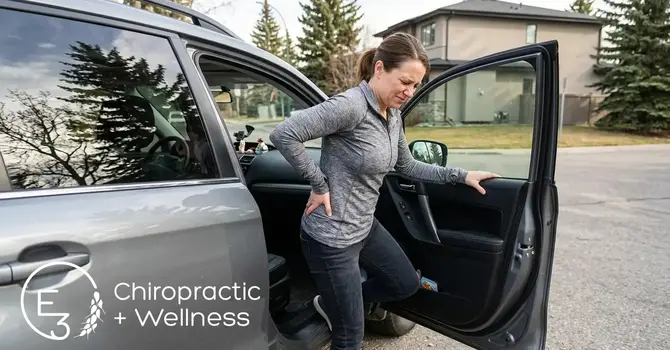
Why stretching feels good… but doesn’t actually fix the problem
Stretching works kind of like hitting a “mute” button on your symptoms.
It calms things down.
It tells your nervous system, “Hey, we’re safe right now.”
And for a short time, your body lets go of some tension.
That’s why it feels good.
But here’s what most people aren’t told:
That tightness you feel isn’t the root problem. It’s a response.
Your body is tightening up for a reason.
So if you only stretch, you’re not addressing why your body keeps going back to that same pattern.
It’s like mopping up water without turning off the tap.
So why is your low back tightening up in the first place?
Let’s break this down in a simple way.
Your body is always trying to protect you.
If something doesn’t feel stable, supported, or controlled… your brain steps in and creates tension.
That tension is your body’s way of saying:
“I don’t trust this position, so I’m going to lock things down.
”For most people dealing with low back pain, a few common things are happening underneath the surface:
1. Your core isn’t doing its job
Your core isn’t just about abs or aesthetics.
Think of it like a natural brace for your spine.
Its job is to create stability so your back doesn’t have to do all the work.
But if your core isn’t engaging well — especially after long hours of sitting — your low back picks up the slack.
Over time, that leads to fatigue, tension, and pain.
2. Your hips aren’t moving the way they should
Your hips are built for movement.
They’re supposed to handle things like bending, squatting, and rotating.
But when they get stiff (which happens a lot with desk work), your body still needs to move somehow.
So your low back steps in to compensate.
And your back? It’s not designed for that level of movement.
So it gets irritated.
3. Your nervous system is always “on”
If your body constantly feels like it needs to guard or protect, your muscles stay tight.
Even if you stretch.
Even if you rest.
It’s like your system never fully powers down.
That’s why you can stretch in the morning, feel okay, and then be right back where you started by the afternoon.
Who this tends to affect the most
If you’re reading this and thinking, “Yep, that’s me,” you’re not alone.
We see this all the time with people who:
- Sit most of the day for work
- Try to stay active but feel limited by low back pain
- Have tried physio, chiro, or YouTube exercises that didn’t stick
- Feel like they’re doing “all the right things”… but not getting results
A lot of them are the same people searching things like “low back pain Saskatoon” or “chiropractor Saskatoon”, just trying to find something that actually works.
And honestly, the frustration makes sense.
Because most of the advice out there focuses on symptoms… not the full picture.
So what should you be doing instead?
Don’t panic, this doesn’t mean you’ve been wasting your time.
It just means we need to shift your focus a bit.
Instead of asking, “What should I stretch?”
Start asking, “What is my body missing?”
Here’s where I’d have you start:
Build stability first
If your body doesn’t feel supported, it won’t let go of tension.
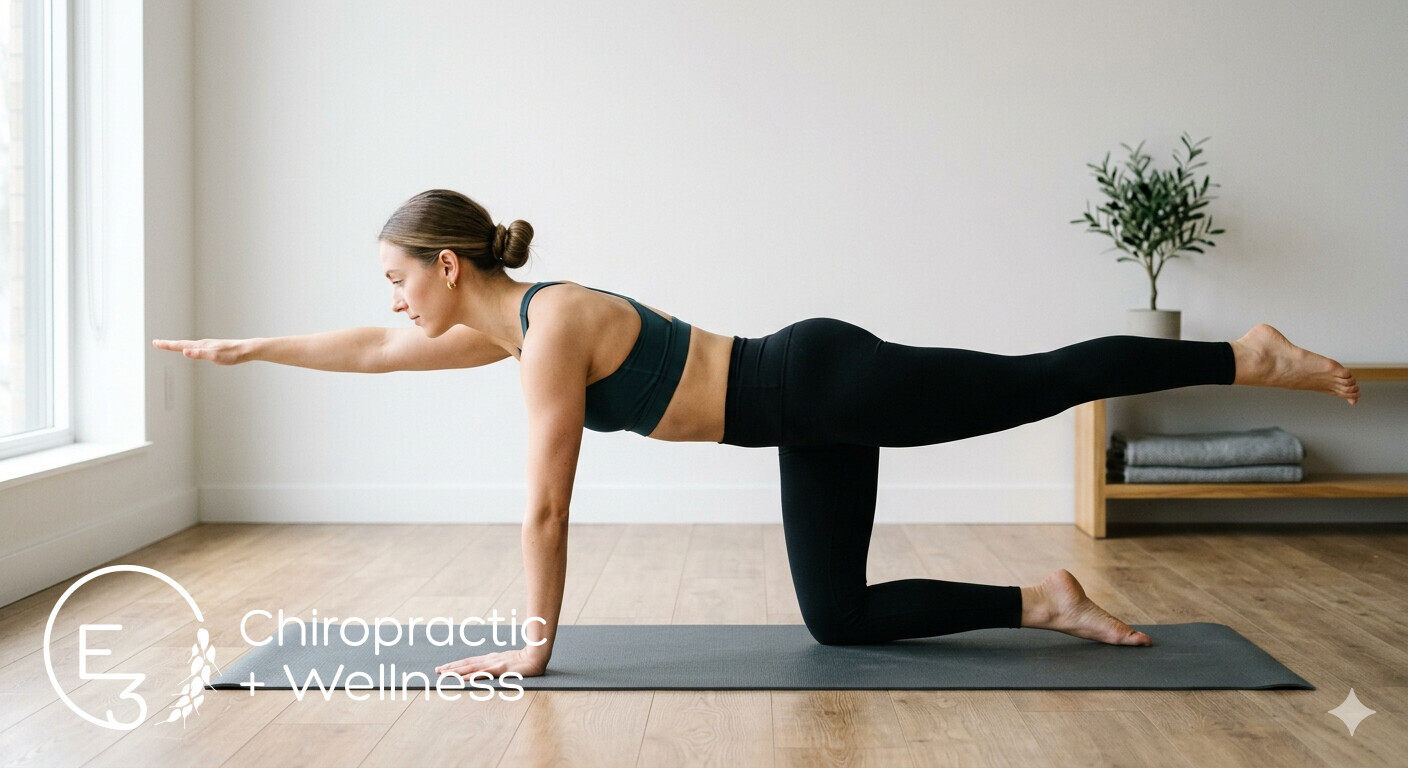
That’s why controlled core work is so important.
Not random ab exercises. Not just planks for as long as possible.
But learning how to actually control your spine and pelvis in different positions.
Improve how you move, not just how far you move
Mobility isn’t just about being flexible.
It’s about having control through a range of motion.
So instead of long passive stretches, think:
- Can I control my hips when I squat?
- Can I move without my back taking over?
That’s where real change starts to happen.
Calm your system down
This is the piece most people skip.
If your nervous system is always in “protect mode,” your muscles will stay tight no matter what you do.
Simple things like breathing work can make a big difference here.
Not in a fluffy way, but in a very real, physical way that changes how your body holds tension.
Gradually get back to the things you enjoy
Avoiding movement might feel like the safe option.
But long-term, it usually makes things worse.
Your body needs exposure to movement to rebuild confidence.
That doesn’t mean pushing through pain.
It means progressing in a smart, controlled way.
What this actually looks like in real life
I had someone come in recently who sounds a lot like you.
Desk job. Long hours.
Low back pain that started as “just tightness”… and slowly became something that affected everything.
Workouts got modified.
Playing with their kids got shorter.
Even relaxing on the couch wasn’t comfortable anymore.
They had already tried stretching every day.
And just like you, they kept saying:
“It helps for a bit… but it never sticks.”
Once we actually looked at how their body was moving, things started to make more sense.
Their hips were barely contributing.
Their core wasn’t giving them much support.
And their low back was doing way more work than it should.
We didn’t stop stretching completely.
We just stopped relying on it as the main solution.
Instead, we focused on building control, improving movement, and giving their body a reason to stop guarding.
And over time, things started to shift.
Not overnight.
Not perfectly.
But consistently.
So what’s your next step?
If you’ve been stuck in that cycle of:
Stretch → feel better → pain comes back → stretch more…
It might be time to take a different approach.
Not a more complicated one.
Just a more targeted one.
If you’re in Saskatoon and dealing with low back pain, the next step is simple.
Book a discovery call.
This isn’t treatment.
It’s not a diagnosis.
It’s a conversation.
We’ll learn more about you and your injury, and make sure we are the right people to help you.
From there, you’ll have a much clearer idea of what to do next.
Because at the end of the day…
The goal isn’t just to feel better for 10 minutes after a stretch.
It’s to help your body move in a way where it doesn’t keep going back to pain in the first place.
When you’re ready, click HERE to book a discovery call with us today, and start getting some real answers.