
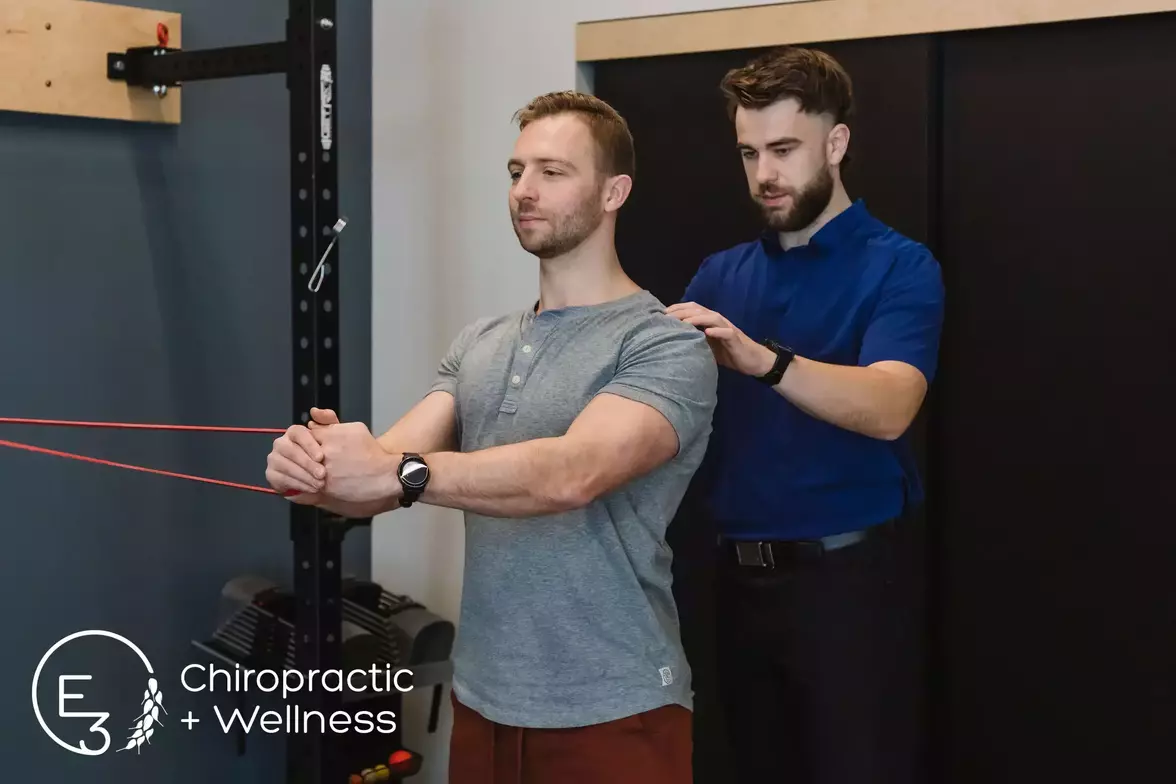
Are You Nervous About Your First Visit? You’re Not Alone.
If you’re considering your first chiropractic adjustment, you probably have a few questions running through your mind: Is it safe? Will it hurt? And what is that popping sound, anyway?
We get it. The idea of having your spine adjusted can sound intimidating, especially if all you’ve seen are videos online. But here at E3 Chiropractic + Wellness, our top priority is ensuring you feel informed, comfortable, and empowered every step of the way.
We want to empower you to take control of your pain and get back to the activities you love. The adjustment is a powerful tool to achieve that—but it’s only one part of the solution.
As your trusted Saskatoon Chiropractor, we believe knowledge defeats fear. This guide is dedicated to pulling back the curtain and clearly detailing the patient experience, focusing on safety, specificity, and what you’ll actually feel before, during, and after your first adjustment.
Step 1: The E3 Assessment—Specificity Above All
Before any adjustment is ever performed, safety and specificity are non-negotiable. An adjustment without proper diagnosis is just guesswork. This is why your initial visit at E3 Chiropractic + Wellness starts with a thorough physical exam and consultation.
We’re not just looking for pain; we are looking for the cause of the pain. We identify areas of joint dysfunction—places where a joint is not moving freely—that are creating stress in your nervous system and leading to muscle fatigue or chronic stiffness.
This initial assessment is crucial because it answers three vital questions:
- Is Chiropractic Right for You? We screen for any contraindications and ensure the adjustment is the safest, most effective tool for your specific issue.
- Where is the Root Problem? Pain in your shoulder can originate in your neck. Pain in your knee can be caused by imbalances in your hip or lower back. We pinpoint the exact restriction that needs to be addressed.
- How Will We Adjust? Based on your body, your history, and your comfort level, we tailor the technique to be as gentle and effective as possible.
Step 2: What to Expect During the Adjustment
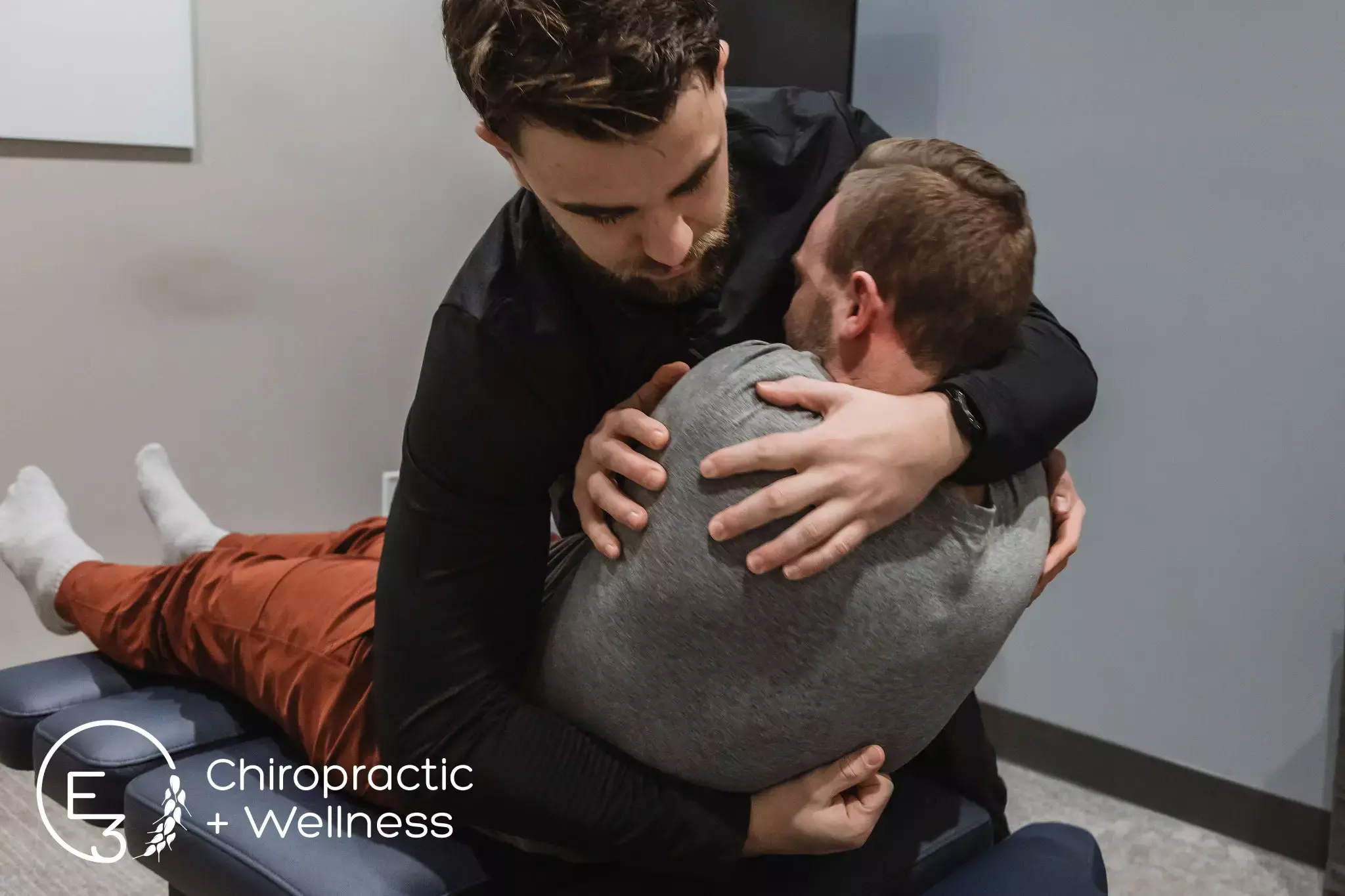
Once the area of restriction has been identified, the adjustment itself is a quick, specific, and controlled force applied to the joint. It is designed to restore motion to the fixated area.
Focus on Specificity, Not Force
Many people worry the adjustment will be a forceful manipulation, but the focus at E3 is on specificity. We position the joint at the exact point of restriction and apply a shallow, gentle pressure or thrust.
You may hear a sound, and you may not. Here’s what we want you to understand about the sound:
- The Sound is NOT Required: The goal of the adjustment is to restore motion to the joint, not to create a noise. If the joint moves, the adjustment was successful, regardless of an audible "pop."
- The Sound is NOT Your Bones Moving: Your bones are exactly where they should be! The sound is the release of gas (like nitrogen) from the joint fluid—a natural phenomenon called cavitation or tribonucleation. Think of it like opening a carbonated drink.
We use only the minimum amount of force necessary to achieve the desired outcome: restoring proper joint function so you can start working towards greater mobility and stability.
Step 3: Post-Adjustment and Active Recovery
What happens after the adjustment is just as important as the adjustment itself. This is where we shift from passive treatment to active empowerment.
What You Might Feel Immediately After
- Immediate Relief: Many patients feel an immediate sense of lightness or decreased tension.
- Temporary Soreness: It is common to feel slightly sore or stiff in the area for 12–24 hours, similar to a good, deep workout. This is a normal healing response as your muscles adapt to their new, improved position.
- Deep Relaxation: Because the adjustment affects the nervous system, some patients feel very relaxed or even slightly fatigued—your body is processing the change.
The Personalized Movement Prescription
The adjustment provides the necessary window for change, but your home care ensures the change lasts. We will coach you through personalized movements and exercises designed specifically for your body.
Yes, some of these exercises might feel boring or tedious—but we give them to you because we care about your long-term outcome. They are the keys to strengthening your core stabilizers and maintaining the alignment we restored, allowing you to truly live pain-free.
Ready to Trade Fear for Freedom?
The most effective way to eliminate the fear of the unknown is to face it with clarity and confidence. We hope this explanation has clarified the process and shown you how safe, specific, and beneficial an adjustment can be when performed by an expert.
Don't let questions about "the pop" hold you back from getting the help you need. Our purpose is to help you move, feel, and perform again.
Click HERE to book a discovery call with your expert Saskatoon Chiropractor at E3 Chiropractic + Wellness and take the first step toward restoring your movement!
____________________________________________________
The information in this article is for educational purposes only. We are always happy to answer your questions during your consultation at E3 Chiropractic + Wellness.



.jpg)
